
Web Development Trends in 2026: What Developers Should Be Watching
The web moves quickly, but not every new technology changes the way we build applications. While frameworks like Angular, React and Vue continue to evolve, many of the biggest developments in 2026 are happening at the platform level.
Browsers are becoming more capable, AI is finding its place in everyday applications, and long-standing problems like authentication and browser compatibility are steadily improving.
Here are six trends that are shaping the future of web development.
1. The Web Platform Is More Powerful Than Ever
One of the biggest changes over the past few years has been the steady improvement of the web platform itself. Features that once required third-party libraries are now built directly into modern browsers.
APIs and features such as the View Transitions API, Navigation API, Scroll-driven Animations and CSS Container Queries are making it possible to build richer user experiences with less JavaScript.
The introduction of the Web Platform Baseline has also made adopting new features much easier. Instead of constantly checking browser compatibility tables, developers can use Baseline as a guide for features that are widely supported across modern browsers.
For frontend developers, this means spending less time working around browser limitations and more time building features.

2. AI Is Becoming Part of the User Experience
A year ago, most conversations about AI centred around code generation. In 2026, the focus has shifted towards integrating AI into the applications we build.
We're seeing AI used to power natural language search, summarise content, assist users with complex workflows and provide conversational interfaces.
This introduces new challenges for frontend developers. Designing streaming interfaces, handling long-running requests, managing user expectations and ensuring accessibility are becoming increasingly important skills.
AI isn't replacing traditional user interfaces, but it's becoming another way for users to interact with them.
3. Browser Compatibility Is Finally Improving
Cross-browser compatibility has been a pain point for web developers for decades, but things are moving in the right direction.
The Interop project, a collaboration between major browser vendors, continues to focus on making browsers behave more consistently. As support improves for modern CSS and web APIs, developers can spend less time debugging browser-specific issues and more time building features.
It's not the most exciting trend, but it may be one of the most impactful. Better browser compatibility means faster development, fewer workarounds and greater confidence when adopting modern web technologies.
4. Passkeys Are Replacing Passwords
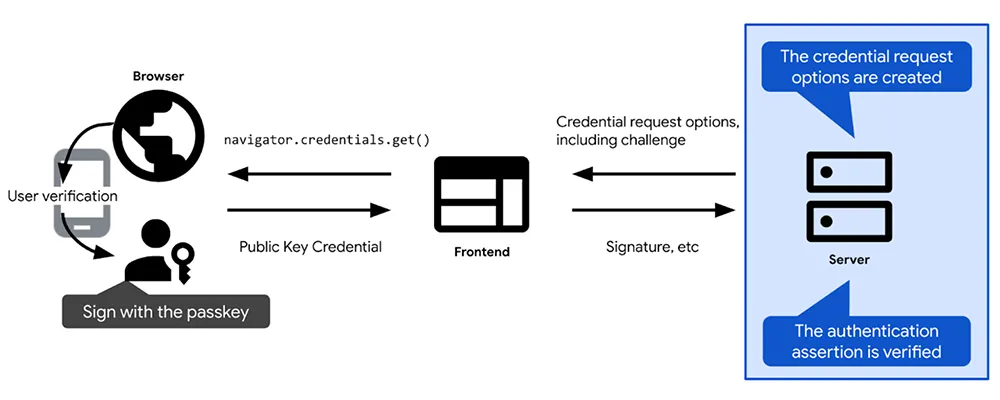
Passwords aren't disappearing overnight, but passkeys are becoming an increasingly common way to sign in to websites and applications.
Built on the WebAuthn standard, passkeys provide a simpler and more secure authentication experience while reducing the risk of phishing attacks and credential theft.
As adoption continues to grow across browsers and operating systems, frontend developers are more likely to find themselves implementing passkey authentication as part of new applications rather than relying solely on traditional usernames and passwords.
5. Performance Is Still One of the Biggest Differentiators
Performance has always mattered, but expectations continue to rise.
Users expect applications to load quickly, feel responsive and work well on a wide range of devices and network conditions.
While frameworks continue to improve rendering performance, there's also a renewed focus on reducing JavaScript, optimising assets, improving caching strategies and making better use of browser-native capabilities.
Performance isn't just about achieving a perfect Lighthouse score. Faster applications typically provide a better user experience and often lead to improved engagement and accessibility.

6. Front-End Development Is Becoming More Cross-Disciplinary
The role of a frontend developer continues to expand beyond building user interfaces.
Today's developers are expected to think about accessibility, security, performance, user experience and increasingly, AI. Understanding how these areas fit together is becoming just as valuable as knowing a particular framework.
Whether you're working with Angular, React or another technology, the strongest frontend developers are those who understand the wider web ecosystem and can make informed decisions about the tools and platform features they use.

Final Thoughts
If there's one theme running through 2026, it's that the web platform is continuing to mature. Browsers are becoming more capable, standards are improving, and many of the features that once required external libraries are now available out of the box.
At the same time, AI is changing how users interact with applications, modern authentication is improving security, and performance remains a key differentiator.
Frameworks will continue to evolve, but keeping an eye on the broader web platform is just as important. Many of the biggest changes happening in frontend development today aren't tied to a specific framework—they're making the web itself a more capable platform to build on.
 Get in touch